What makes a tradeshow display stand out?
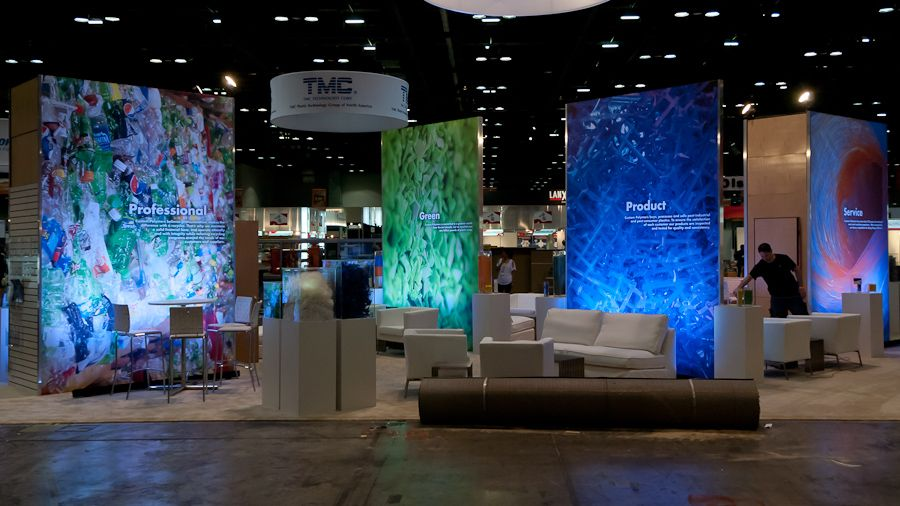
A standout tradeshow display grabs attention instantly and communicates your message clearly. It combines strong visual hierarchy, brand consistency, and interactive elements that invite engagement. Bold signage, clever lighting, tactile materials, and product demos can dramatically increase dwell time and recall. An effective display is not just visually appealing — it should be intuitive, accessible, and built around the needs of your target audience.
How do I attract foot traffic at tradeshows and conferences?
To attract visitors at tradeshows and conferences, focus on visibility, interaction, and relevance. High-contrast signage, open layouts, and eye-catching visuals work best in crowded halls. Offering hands-on demos, giveaways, or mini-experiences creates reasons for attendees to stop and engage. Most importantly, your team should actively invite people in, not just wait for interest. A friendly welcome goes further than flashy design alone.
Elements every tradeshow display should include
A high-performing tradeshow display should feature:
- Clear brand messaging and visual identity
- Vertical signage visible from a distance
- Interactive elements like demos, touchscreens, or sampling
- Product or service focal points
- Storage space for collateral and giveaways
- Lighting that enhances visibility and mood
- Comfortable layout that supports flow and conversation
Why is strategic display design critical in trade fair marketing?
In trade fair marketing, display design is often the first — and sometimes only — touchpoint between your brand and a potential buyer. According to a 2023 report by CEIR (Center for Exhibition Industry Research), 79% of tradeshow attendees research a brand after visiting a booth — meaning that initial impression must be sharp, relevant, and aligned with business goals.
Effective design supports both branding and behavior. A poorly designed booth may repel traffic, while a thoughtful one encourages interaction, content capture, and conversion.
Leading exhibition strategists also recommend designing with psychology in mind. Color psychology, spatial perception, and focal depth all influence visitor behavior. For example, cool colors like blue and green can create calm and trust, while orange and red promote urgency or excitement. Strategic lighting enhances these effects and helps define focal zones within your space.
A strong tradeshow display should also mirror the communication flow: from discovery (signage), to exploration (interactions), to action (calls to action and conversion). That flow should support the attendee’s natural path of movement, not disrupt it.
What are the most common mistakes in tradeshow display design?
Many businesses unintentionally undermine their trade fair marketing efforts by overcomplicating the booth or underdelivering on experience. Here are common issues to avoid:
- Cluttered messaging: Too much text or conflicting visuals confuse the visitor.
- Poor layout: Narrow aisles or blocked entrances discourage people from entering.
- Lack of differentiation: A generic design blends into the background.
- No staff engagement: A beautiful booth is wasted if the team isn’t proactive.
- Weak CTA: If you’re not guiding visitors to a next step — demo, signup, or scan — you’re losing leads.
Good display design isn’t just decoration — it’s a business tool that supports your goals.
Expert Insight: What Do Industry Specialists Recommend?
Industry experts emphasize aligning design with audience behavior and event objectives.
Chris Dorn, president of ExhibitCraft, notes that the most effective booths “feel like environments, not displays.” He adds that “attendees remember spaces where they felt something — surprise, curiosity, inclusion.”
Meanwhile, a study by Freeman Exhibitions found that 74% of tradeshow attendees have a more favorable opinion of a brand after an engaging booth experience, particularly when the booth included live demos, motion graphics, or sensory experiences (like scent or texture).
Additionally, modular booth systems are gaining popularity among mid-sized brands. These allow brands to adapt their display to different event formats while preserving consistent branding and structural integrity. This is especially important as companies increasingly participate in tradeshows and conferences across regions and industries.
Lastly, investing in UX-focused booth design — considering touchpoints, wayfinding, and dwell time — is becoming a new standard in trade fair marketing, mirroring best practices from digital UX.
FAQs About Tradeshow Displays
1. How early should I begin planning my tradeshow display?
Begin planning at least 3–4 months in advance to allow time for design, production, shipping, and staff preparation. Larger booths may need more lead time.
2. Can I reuse tradeshow displays across different events?
Yes. Modular and customizable display systems allow you to reuse key elements while tailoring visuals or content to each event’s audience and space.
3. Is it worth hiring a professional exhibit designer?
If your budget allows, absolutely. A skilled designer will align your booth with your marketing goals, audience psychology, and brand identity, helping you stand out in a competitive environment.
Conclusion
A standout tradeshow display is more than a structure — it’s a fully integrated marketing asset. It should inform, attract, and convert. Whether you’re appearing at regional tradeshows and conferences or global expos, success begins with knowing your audience, setting clear goals, and designing with strategy.
Investing in thoughtful design, rooted in proven trade fair marketing principles and user-centered experiences, is the best way to turn foot traffic into real business opportunities.